Challenges in Identifying Similar Vehicle Models

Challenges in Identifying Similar Vehicle Models
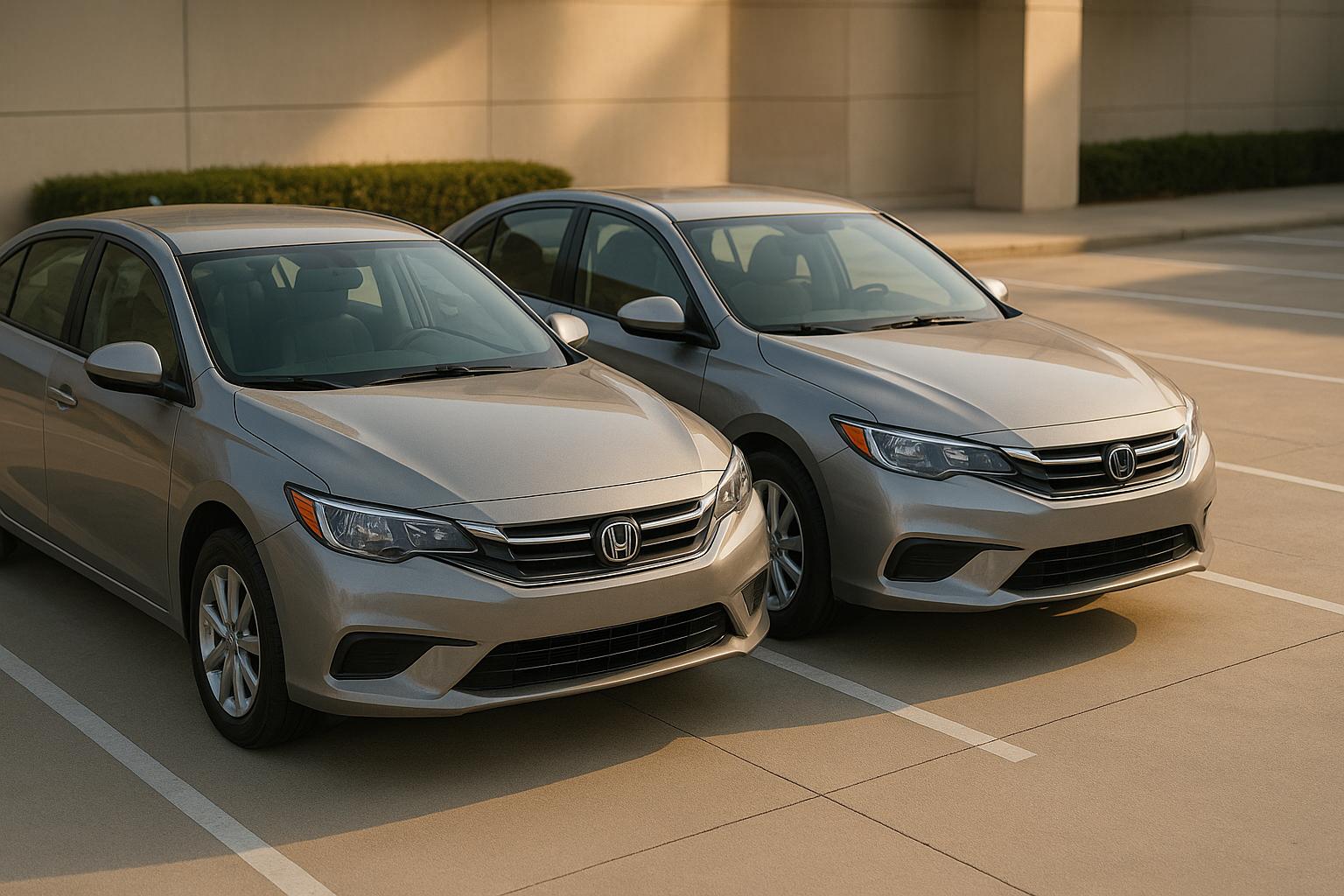
Cars from different brands are starting to look almost identical. Why? Automakers are using shared designs and engineering platforms to save costs and improve aerodynamics. This makes it harder for industries like insurance, law enforcement, and fleet management to tell vehicles apart, especially in bad lighting or weather.
Key Challenges:
- Similar Designs: SUVs and crossovers often share shapes, grilles, and trims, making them hard to distinguish.
- Image Issues: Low-quality photos, motion blur, or poor lighting add to the difficulty.
- Rare/New Models: Limited data on new or uncommon cars can cause misidentification.
Solutions:
- AI and Deep Learning: Tools like CNNs analyze subtle details like headlight shapes or grilles.
- Data Augmentation: Tweaking existing images (e.g., cropping, rotating) improves recognition accuracy.
- Multi-Source Data: Combining AI with VIN decoding or license plate data boosts precision.
For example, platforms like CarsXE integrate visual AI with VIN decoding and license plate recognition to improve accuracy by up to 98%. This hybrid approach helps industries avoid mistakes caused by lookalike vehicle designs.
OSINT Tool - CarNet.ai | A useful tool to identify cars in images
Main Challenges in Vehicle Model Identification
Identifying vehicles based on visual cues alone comes with a host of challenges, often rooted in overlapping designs and imaging limitations. These hurdles are amplified by industry trends and the sheer variety of vehicles on the market.
Similar Design Features Across Models
The growing use of shared platforms and design convergence among automakers has blurred the lines between different makes and models. For instance, shared engineering platforms often result in similar body shapes, lighting designs, and trim elements across brands. This is especially evident in SUVs, where many manufacturers now produce vehicles with nearly identical silhouettes and grille designs. The shift toward modular platforms has only intensified this issue, particularly in popular segments like SUVs and crossovers.
In the U.S. alone, the scale of this challenge is staggering. With thousands of car models available, each offering multiple trims and configurations, even seasoned experts can struggle to differentiate between them. Add to that the hundreds of new or refreshed models introduced annually, and the complexity of maintaining accurate identification systems becomes even more daunting. Manufacturers sometimes add to the confusion by using camouflage wraps on prototype vehicles, deliberately hiding design details to prevent early recognition.
This trend of design overlap creates additional obstacles when combined with real-world imaging conditions.
Poor Image Quality and Conditions
Real-world conditions often make vehicle identification even tougher. Low-resolution images, motion blur, and poor lighting can obscure critical details needed for accurate recognition. Adverse weather conditions like rain, fog, or glare, as well as nighttime imaging, further complicate the process for both human observers and automated systems.
Challenge Type Human Impact Automation Impact Similar design features Difficult Difficult Poor image quality Very difficult Very difficult Insufficient data (rare/new) Difficult Very difficult Camouflage/prototype vehicles Extremely difficult Extremely difficult
When these imaging challenges are combined with limited data availability, identifying vehicles becomes even more complex.
Insufficient Data for Rare or New Models
Rare or newly introduced models often suffer from a lack of labeled images, making them harder to identify. This can lead to errors, as systems may misclassify these vehicles or fail to recognize them entirely. Techniques like data augmentation, transfer learning, and integrating data from multiple sources can help address this issue. For example, combining visual information with VIN numbers or license plate data can provide a more complete picture.
Comprehensive vehicle data platforms play a critical role here by offering access to detailed specifications, historical data, and labeled images. These resources not only enhance visual recognition systems but also help bridge the gap when image data is scarce. Tackling these data limitations is essential for building more reliable identification systems.
Solutions for Better Vehicle Model Identification
With advanced AI, smarter data strategies, and integrated systems, identifying similar vehicle models has become more precise than ever.
Deep Learning and AI Methods
Convolutional neural networks (CNNs) have transformed how vehicles are identified, capturing subtle visual details that might escape even the most trained human eye. For instance, these systems can differentiate between headlamp shapes or grille designs, making it possible to tell apart models like the Toyota Camry SE and XLE or various Honda trims. Unlike general image recognition, these methods focus on fine-grained distinctions, using part-based analysis and attention mechanisms to zero in on specific vehicle components. By analyzing massive datasets, deep learning uncovers patterns that go far beyond human observation.
This AI-driven precision lays the groundwork for better data strategies.
Data Improvement Strategies
When it comes to rare or newly released vehicle models, limited data can be a real challenge. To address this, innovative methods like synthetic data generation come into play. By creating computer-generated images or using generative adversarial networks (GANs), systems can generate diverse, labeled examples for underrepresented vehicles.
Another approach is data augmentation, where existing datasets are expanded by tweaking images - rotating, cropping, adjusting brightness, or adding noise. This not only increases the variety of training data but also makes systems more resilient to poor image quality, inconsistent lighting, and varied camera angles.
Contrastive learning is another game-changer. It trains systems to recognize similarities and differences between image pairs. This is especially useful for distinguishing vehicles with overlapping design features, ensuring the model can spot even the smallest visual nuances.
Multi-Source Data Systems
Relying solely on visual recognition has its limits, especially when dealing with poor-quality images or nearly identical designs. That’s where multi-source data systems step in, combining visual data with structured information for better accuracy.
One powerful tool is VIN decoding integration. When visual recognition struggles to differentiate between similar models, license plate recognition can access registration data, and the system decodes the VIN to confirm the exact make, model, and year. For example, a vehicle inspection company combined image recognition with VIN decoding and license plate data, increasing accuracy from 85% to 98% when identifying similar Ford SUVs.
Selective prediction mechanisms offer another layer of reliability. These systems can “pause” when confidence levels are low, flagging uncertain cases for human review or requesting additional data. This significantly reduces the risk of misidentification.
Platforms like CarsXE showcase the power of multi-source strategies. CarsXE provides real-time access to vehicle specifications, VIN decoding, license plate data, and high-quality images from over 50 countries. By integrating these data streams through APIs, developers can build systems that combine visual AI with trusted vehicle data, ensuring higher accuracy for models sold both in the U.S. and abroad.
CarsXE’s OCR capabilities for VIN and license plate images further enhance identification, seamlessly linking visual recognition with structured data validation. By cross-referencing visual data with vehicle registration records, recall histories, and market data, these systems minimize errors caused by visual similarities alone.
sbb-itb-9525efd
Using Vehicle Data Platforms for Better Results
When visual recognition hits its limits, vehicle data platforms step in to fill the gap between what the eye can see and the detailed records vehicles carry. These platforms revolutionize the identification process by providing instant access to in-depth data that goes far beyond surface-level observations. This data-centric approach is the backbone of robust API integration for vehicle identification.
Vehicle Data APIs for Identification
Modern vehicle identification systems increasingly depend on RESTful APIs to tap into vast, real-time databases of vehicle information. A standout example is CarsXE, which offers a range of APIs for tasks like VIN decoding and market valuations across more than 50 countries.
These APIs shine where visual recognition falters. For instance, if a visual recognition system struggles to distinguish between a Honda Accord LX and EX trim, VIN decoding can instantly pinpoint the exact specifications that set them apart.
VIN decoding works by interpreting the 17-character Vehicle Identification Number (VIN), a process often enhanced by OCR (Optical Character Recognition) for VIN and license plate images. Each VIN encodes key details - such as the manufacturer, model year, engine type, and production data - that visual analysis alone cannot uncover. CarsXE’s VIN decoder processes this information in real time, delivering detailed specifications to either confirm or correct visual findings.
For developers building large-scale systems, CarsXE offers a user-friendly dashboard with essential analytics. Pricing starts at a subscription with monthly quota + per-product overage rates (see https://api.carsxe.com/pricing), and includes a free Sandbox tier (up to 100 free API calls) to test integrations.
Combining Visual Recognition with Vehicle Data
The most accurate identification systems rely on a hybrid approach, blending AI-powered visual recognition with structured vehicle data. Visual recognition is excellent for initial categorization, narrowing down possibilities, but it can struggle with fine details - like distinguishing between trims with subtle design differences.
This is where cross-verification workflows excel. A typical process begins with visual recognition to identify potential matches, followed by VIN decoding or license plate lookup to confirm the exact model, year, and specifications. This two-step process can boost accuracy rates from around 70–80% with visual recognition alone to over 90% when paired with comprehensive vehicle data APIs.
CarsXE’s extensive image library further enhances this hybrid method. These reference images allow visual systems to compare and validate matches. When combined with detailed specification data, the result is a complete vehicle profile that no single method could achieve on its own.
Adding real-time market value data brings even more depth. By providing current values in US dollars, these insights can highlight trim levels and optional packages that aren’t immediately obvious. Recall and history data also improve reliability, flagging vehicles with known issues or modifications - even among models of the same year and trim.
This combined approach has delivered tangible benefits. Insurance companies report fewer misidentifications, while dealerships streamline inventory cataloging without needing manual verification.
"CarsXE offers MotorTango's customers fast and accurate car data, setting a standard of excellence that stands unmatched by its competitors... enhancing our customers' overall experience and satisfaction."
- Andy Liakos, CTO, MotorTango
This testimonial underscores how integrating real-time, structured vehicle data with visual recognition can significantly enhance both accuracy and reliability in identification systems.
Conclusion: Solving Vehicle Model Identification Problems
Pinpointing similar vehicle models is no easy task, especially when designs are nearly identical. The solution lies in combining advanced AI technologies with diverse, reliable data sources. This approach addresses the challenges discussed earlier and paves the way for more accurate identification.
While deep learning excels at spotting subtle visual differences, relying solely on visual recognition isn't enough when vehicles share almost indistinguishable designs. A hybrid strategy - merging visual analysis with data from multiple sources - significantly boosts accuracy, overcoming the limitations of using one method alone.
Platforms like CarsXE demonstrate how this can work in practice. By providing real-time access to vehicle details such as specifications, VIN decoding, license plate lookups, and market values in over 50 countries, CarsXE sets a high standard. Its OCR technology even extracts VINs and license plates from low-quality images, addressing a common hurdle for many businesses. Plus, CarsXE offers scalable plans tailored for developers who need precision tools to build robust identification systems.
As automakers continue to release new models and variations at a rapid pace, manual identification methods will struggle to keep up. For industries like insurance, automotive services, dealerships, and law enforcement, adopting advanced AI alongside comprehensive data platforms is no longer optional - it’s essential.
The key to success in vehicle model identification lies in embracing these cutting-edge tools. Businesses that integrate AI-powered visual recognition with diverse data platforms will achieve the accuracy and reliability needed to navigate today’s ever-evolving automotive market with confidence.
FAQs
How do shared engineering platforms used by automakers affect the accuracy of vehicle identification systems?
Shared engineering platforms help automakers create multiple vehicle models with similar characteristics, such as body styles, headlights, or interior designs. This approach streamlines manufacturing and cuts costs, but it also introduces a challenge: it becomes harder for vehicle identification systems to tell models apart.
These systems depend on detailed information, like VIN decoding or distinct design features, to accurately identify vehicles. When too many design elements overlap across models, the chances of misidentification grow - especially if the system doesn’t have access to thorough and up-to-date vehicle data. Using reliable vehicle data solutions can solve this issue by delivering precise specifications and unique identifiers for each model.
How do AI and deep learning help differentiate between visually similar vehicle models?
AI and deep learning have become game-changers in identifying and differentiating vehicles with similar designs. By examining fine details like subtle design tweaks, distinct features, and patterns in vehicle images, these technologies can pinpoint specific models with impressive precision.
What makes deep learning so effective is its ability to handle massive datasets, including high-resolution images and detailed vehicle specifications. This allows the models to "learn" and pick up on the unique traits that set one vehicle apart from another. These tools shine in situations where traditional methods fall short - like when design elements overlap or when data is sparse. Thanks to ongoing advancements in AI, identifying similar vehicle models is now faster, more dependable, and able to handle large-scale demands with ease.
How can industries like insurance and law enforcement use vehicle data and visual recognition technology effectively?
Industries like insurance and law enforcement stand to gain a lot by integrating visual recognition technology with detailed vehicle data platforms. This combination allows for more precise identification and differentiation of similar vehicle models, cutting down on mistakes in claims processing, investigations, and vehicle identification.
By tapping into platforms that offer real-time access to comprehensive vehicle details - such as specifications, history, market value, and recalls - these industries can simplify workflows, make better decisions, and achieve higher accuracy in their operations. The result? Saved time and improved effectiveness in handling critical tasks.
Related Blog Posts
- Multi-Language OCR for Vehicle Data: How It Works
- Study: OCR Accuracy in Vehicle Data Processing
- AI Noise Reduction in License Plate OCR
- How VIN Decoding Changed Automotive Data Access