Low-Light Plate Recognition: AI vs. Traditional Methods

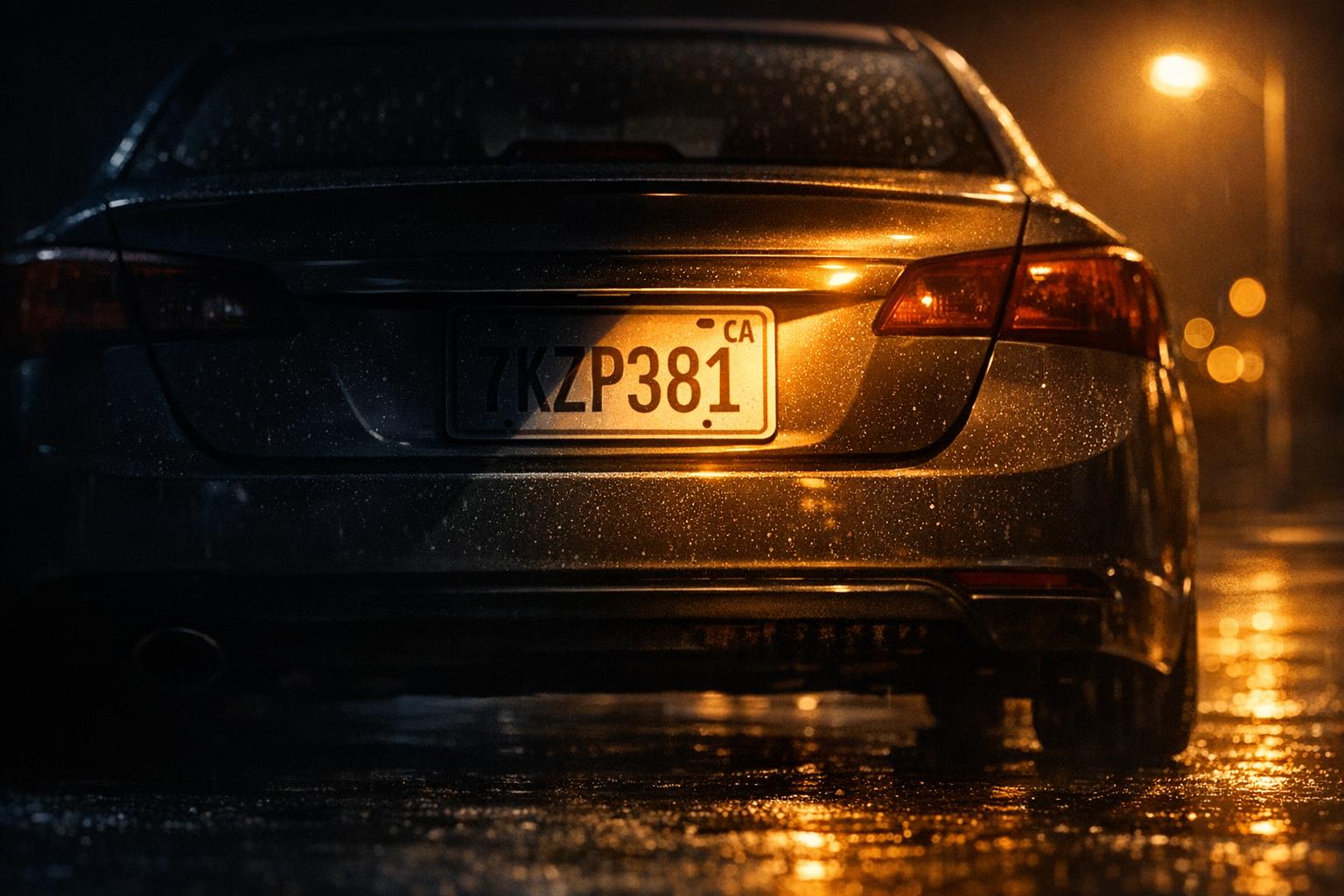
Low-Light Plate Recognition: AI vs. Traditional Methods
AI systems outperform traditional approaches in low-light license plate recognition. Why? AI leverages data-driven models to solve challenges like poor lighting, shadows, and motion blur, where traditional methods struggle. Here's a quick breakdown:
- Traditional Methods: Use fixed algorithms (e.g., edge detection, contrast adjustments) but falter in complex conditions like glare or damaged plates. Accuracy drops to ~75% at night.
- AI-Based Methods: Neural networks (e.g., YOLOv10) adapt to various conditions, achieving up to 99.16% accuracy and faster processing (1ms per image).
Key Findings:
- AI models excel in low-light scenarios, handling distorted or incomplete data better.
- Traditional systems are cheaper and simpler but lack flexibility in dynamic conditions.
- Combining both can improve results, as seen with hybrid models reaching a precision of 0.945.
Quick Comparison:
Feature Traditional Methods AI-Based Methods Accuracy ~75% in low light Up to 99.16% Speed Fast but limited Ultra-fast (1ms/image) Adaptation Manual tuning required Data-driven learning Cost Lower Higher (requires GPUs)
AI is transforming license plate recognition, especially for law enforcement and traffic systems, by addressing the shortcomings of older methods.
AI vs Traditional Methods for License Plate Recognition: Performance Comparison
Traditional Methods for Low-Light Plate Recognition
Common Techniques in Traditional Methods
Traditional ALPR systems rely on mathematical algorithms to process images before recognizing characters. Techniques like Contrast Limited Adaptive Histogram Equalization (CLAHE) adjust brightness in darker areas, while Unsharp Masking (USM) sharpens the edges of letters, making them easier to distinguish.
Binarization algorithms convert grayscale images into black-and-white, separating the characters from the background. Popular methods include Otsu's method, Niblack, Sauvola, and Bernsen's dynamic thresholding. To combat noise, which often increases in low-light conditions, Gaussian blurring is applied. Additionally, edge detection and morphological operations are used to locate and extract license plates from complex backgrounds.
In 2017, researchers Shima Kashef and Hossein Nezamabadi-pour from Shahid Bahonar University of Kerman tested a traditional ALPR system on 4,000 images of Iranian vehicles. Using a combination of contrast enhancement, background removal, and binarization techniques, followed by an ANN-based OCR, they achieved a 91.2% recognition rate for moving vehicles under varied outdoor lighting conditions. These techniques not only enhance plate clarity but also offer a computationally efficient solution.
Benefits of Traditional Approaches
Traditional methods require much less computational power compared to deep learning systems. They can operate on standard processors, eliminating the need for expensive GPUs. This makes them a cost-effective solution for organizations with limited resources. Additionally, the algorithms are relatively simple to implement and don’t demand specialized expertise.
These methods excel as preprocessing tools, especially in environments with consistent lighting. For example, in 2025, researchers from Universitas Hasanuddin analyzed 1,496 images from Electronic Traffic Law Enforcement footage. By combining CLAHE and Unsharp Masking with a YOLOv11 model, they achieved a mean Average Precision of 0.830. This demonstrates how traditional enhancement techniques can still play a valuable role when integrated with modern detection systems [[2]](https://ijesty.org/index.php/ijesty/ article/view/1654).
However, while cost-effective and straightforward, these methods struggle to handle the variability of real-world conditions, particularly in extreme low-light scenarios, where fixed algorithms often fall short.
Where Traditional Methods Fall Short
Despite their strengths, traditional approaches are far from perfect under challenging conditions. Shadows, uneven lighting, and glare from headlights can disrupt their performance. Even infrared illuminators, meant to improve nighttime visibility, can backfire. As noted by Pelco, a surveillance equipment manufacturer:
"The highly reflective paint used in license plate manufacturing will reflect infrared light straight toward the source, resulting in an unreadable image when used as part of an LPR system."
Geometric limitations also pose a problem. Traditional edge detection struggles when cameras are positioned at angles greater than 30 degrees from the vehicle. Motion blur from high-speed traffic can further degrade image quality, and character segmentation often fails with variable-spaced fonts or damaged plates. Studies show that without AI-driven enhancements, traditional methods tend to plateau at around 75% accuracy in nighttime conditions.
These limitations highlight the need for more adaptive solutions, paving the way for AI-based methods, which will be explored next.
sbb-itb-9525efd
AI-Based Methods for Low-Light Plate Recognition
Core AI Techniques and Frameworks
Modern AI-driven Automatic License Plate Recognition (ALPR) systems have revolutionized the field by using large datasets to learn and adapt, avoiding the constraints of fixed-rule systems. A standout approach in this space is the YOLO (You Only Look Once) family of models, which has become a go-to for real-time detection tasks. For instance, YOLOv10 employs adaptive kernels to dynamically extract features under varying lighting conditions.
In November 2025, a YOLOv10-based system, paired with a tailored Tesseract OCR, achieved an impressive 99.16% detection accuracy on a dataset of 50,000 images. Even more remarkable was its speed - processing each image in just 1 millisecond on an NVIDIA Jetson Nano.
Many of these systems rely on a two-stage pipeline. The first stage uses one neural network to detect and isolate the license plate, while a second network decodes the characters. Advanced models go a step further by incorporating Spatial Transformer Networks (STN) and Triplet Attention mechanisms. These enhancements correct distortions, enabling detection precision of 98.9% and recognition accuracy of 91.5% on the CCPD2019 dataset.
These cutting-edge techniques are particularly effective in overcoming the challenges posed by low-light conditions.
Advantages of AI for Low-Light Recognition
AI-based ALPR methods shine in low-light environments by leveraging the ability to learn from extensive real-world data. Techniques like CLAHE (Contrast Limited Adaptive Histogram Equalization) and Unsharp Masking further enhance low-light performance. For example, in 2025, researchers at Universitas Hasanuddin combined YOLOv11 with these enhancement methods to analyze 1,496 images from Electronic Traffic Law Enforcement footage in Makassar, Indonesia. The result? A precision of 0.945 and a recall of 0.977 [[2]](https://ijesty.org/index.php/ijesty/ article/view/1654).
Speed is another major strength of AI systems. On-premise solutions can process data in just 50–100 milliseconds, far outpacing cloud-based systems, which take 200–250 milliseconds. This makes them ideal for high-speed monitoring scenarios where every millisecond counts. Additionally, some AI engines can handle multiple plates in a single image, streamlining recognition in dense traffic conditions.
Such rapid processing capabilities make AI systems highly practical for real-world applications.
AI in ALPR: Practical Applications
AI-powered ALPR systems have found widespread use in various industries. Law enforcement agencies use fixed ALPR setups to identify stolen vehicles in real time, triggering instant alerts when a match is found in their database. Parking management systems use similar technology to detect blacklisted vehicles and enforce time limits automatically. Toll collection has also been revolutionized - AI systems now identify vehicles and handle billing based on license plate numbers, eliminating the need for physical RFID tags.
A practical demonstration of AI's potential came in January 2025, when a Hailo Community developer showcased an ALPR pipeline running on a Raspberry Pi 5 with a Hailo-8L AI accelerator. Using YOLOv8n models for both detection and OCR, the system processed license plates at 15 frames per second on affordable edge hardware.
These examples highlight the versatility and efficiency of AI in real-world ALPR deployments.
AI vs. Traditional Methods: Performance Comparison
Comparing Performance Metrics
When it comes to low-light scenarios, AI systems have shown a clear edge over traditional methods. Traditional techniques, which rely on edge detection and morphological operations, perform adequately under steady lighting conditions. However, their accuracy drops sharply when faced with challenges like rain, fog, or dim lighting. On the other hand, AI-based systems, particularly those using the YOLO framework, consistently deliver reliable results even in these tough environments.
Take YOLOv10 as an example: it boasts a detection accuracy of 99.16% with an impressive F1-score of 0.992, all while processing images in just 1 millisecond. These results are far beyond what traditional methods can achieve in terms of both speed and precision. Here's a quick look at how the two approaches stack up:
Metric Traditional Methods AI-Based Methods (YOLOv10/v11) Accuracy Low/Variable in low light High (up to 99.16%) Speed (Inference) Fast but limited in scope Ultra-fast (approx. 1.0 ms/image) Adaptability Requires manual tuning Self-adapting Real-time Capability Limited by environmental noise High (up to 30 FPS on edge devices) Key Metrics Used Recognition Rate Precision, Recall, mAP, F1-Score
Unlike traditional methods, which need manual feature adjustments, AI models adapt on their own to changes in the environment. These performance metrics have been verified through extensive field testing.
Evidence Supporting AI Performance
Real-world applications further highlight the benefits of AI. For instance, a study using URetinex-Net for low-light image enhancement demonstrated that AI could boost night-time recognition accuracy to 80.11%, marking a 5.11% improvement over systems without enhancement.
AI systems also shine in edge computing scenarios. They can process up to 30 frames per second on cost-effective hardware like the NVIDIA Jetson Nano, making real-time monitoring feasible even in demanding conditions. In contrast, traditional methods falter when dealing with challenges like rain, dirt, or partially obscured license plates. AI-powered OCR engines, however, handle these obstacles with ease. This robust performance underscores the growing need to transition from traditional methods to AI-driven solutions.
Conclusion: Why AI Outperforms Traditional Methods
Main Takeaways from the Comparison
AI-based systems have shown clear advantages over traditional methods for low-light license plate recognition. Traditional systems often struggle with environmental changes and require constant manual adjustments. On the other hand, AI models consistently deliver high detection accuracy, even under the toughest conditions.
AI excels in handling complex scenarios like dual-script plates, stylized fonts, dirt-covered surfaces, and motion blur. It also adapts automatically to changing environments. For example, a 2024 study by Vriza Wahyu Saputra, Nanik Suciati, and Chastine Fatichah revealed that combining URetinex-Net with the TRBA framework improved night-time recognition accuracy to 80.11%, marking a 5.11% boost compared to systems without this integration. Another study that paired YOLOv11 with contrast enhancement techniques achieved impressive results, with a precision of 0.945 and a recall of 0.977 in low-light conditions [[2]](https://ijesty.org/index.php/ijesty/ article/view/1654). These findings highlight AI's ability to provide a more dependable and efficient solution.
How CarsXE Enhances ALPR Systems
CarsXE takes AI-driven Automatic License Plate Recognition (ALPR) to the next level by transforming raw license plate data into actionable insights. Once an AI system identifies the alphanumeric string on a plate, CarsXE's Plate Decoding API steps in to deliver detailed vehicle information - such as make, model, year, specifications, market value, history, and recall data.
This partnership creates a seamless, end-to-end solution tailored for law enforcement, parking management, and intelligent transportation systems. While AI tackles the visual challenges of recognizing plates in low-light conditions, CarsXE adds a critical layer of data, enabling quick and informed decision-making. With access to vehicle data from over 50 countries and easy RESTful API integration, CarsXE complements AI recognition systems, offering a scalable and reliable tool for modern traffic monitoring and management needs. Together, they provide a comprehensive solution that meets the demands of today’s transportation systems.
How to do Automatic Number Plate Recognition using Ultralytics YOLO11 and OpenAI GPT-4o-Mini Model 🎉
FAQs
What hardware is needed to run AI ALPR in real time at night?
To operate AI-based ALPR systems in real time during nighttime, you need hardware capable of handling AI algorithms effectively in low-light conditions. Some excellent options include cameras like the Axis Q1800-LE, which features the Artpec 8 chip. This camera performs exceptionally well, even without relying on Wide Dynamic Range (WDR).
For processing, edge AI processors such as the Hailo-8 are a great choice. These are built to handle fast, real-time data processing directly on edge devices, ensuring smooth and efficient performance.
How much training data is needed for reliable low-light plate recognition?
Recognizing license plates in low-light conditions is no easy feat - it demands access to extensive, specialized datasets. For example, a lightweight CNN-based method has been developed using a dataset of 19,121 samples, ensuring the system has plenty of data to learn from.
But that's not all. Pairing this data with advanced image processing techniques can take accuracy to the next level. Techniques like CLAHE (Contrast Limited Adaptive Histogram Equalization) and USM (Unsharp Masking) help enhance image quality, making it easier to detect and identify license plates even in dim lighting. Together, these tools create a more dependable solution for low-light scenarios.
When does a hybrid (AI + traditional preprocessing) approach make the most sense?
A hybrid approach works best in low-light or poor visibility situations where neither AI nor traditional methods alone can deliver accurate results. By blending traditional techniques like CLAHE, histogram equalization, or Retinex-Net with AI models, image quality improves significantly, enabling AI to recognize license plates more effectively. This combination proves particularly helpful when environmental challenges, such as noise or low contrast, severely impact image clarity, ensuring more reliable recognition.
Related Blog Posts
- Study: OCR Accuracy in Vehicle Data Processing
- AI Noise Reduction in License Plate OCR
- How Image Preprocessing Improves License Plate Recognition
- RNNs for Vehicle License Plate Recognition