VIN Year Codes: Complete Chart

VIN Year Codes: Complete Chart
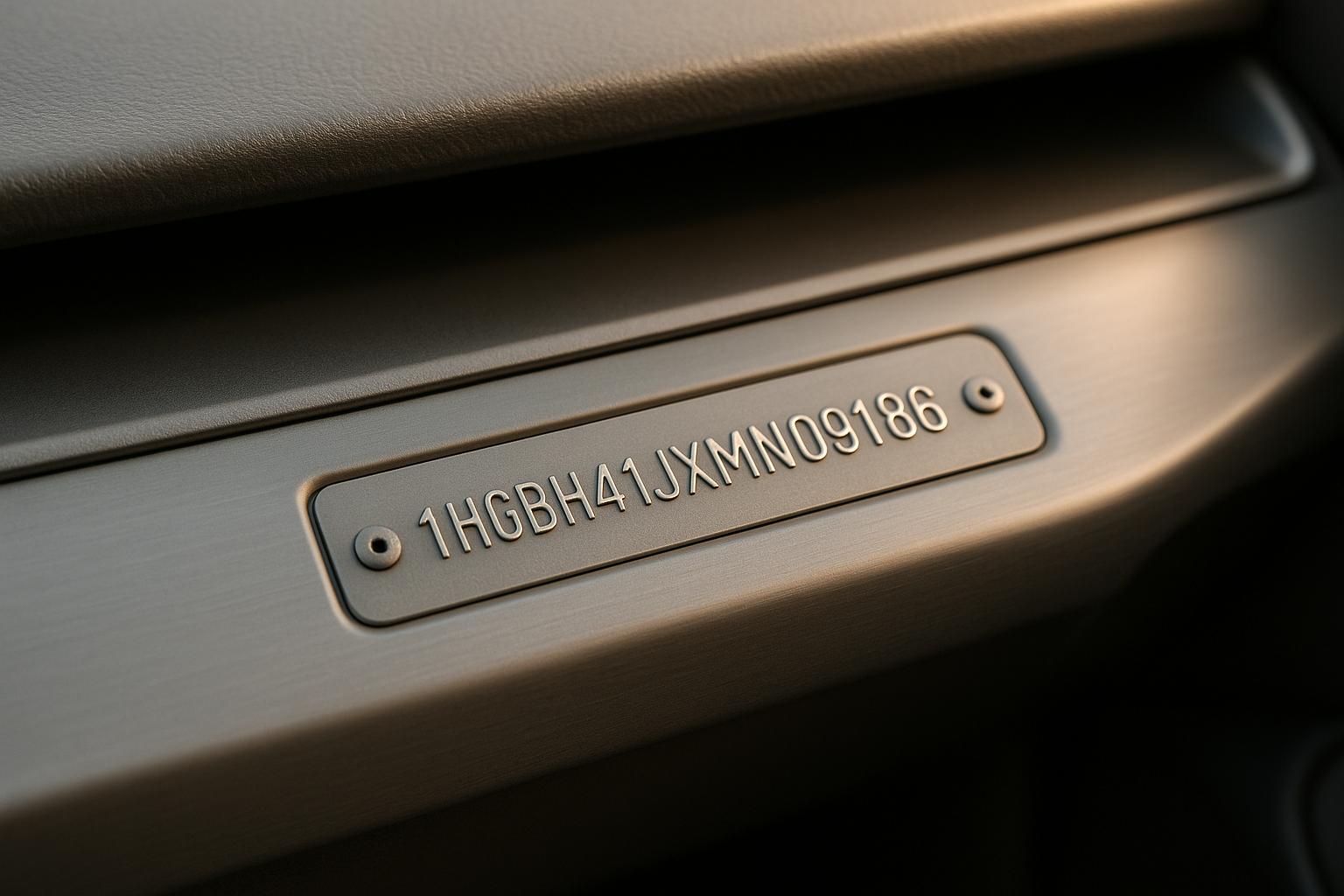
Every vehicle has a unique 17-character VIN (Vehicle Identification Number) that contains crucial details, including the model year. The 10th digit of the VIN reveals the vehicle's production year, following a standardized system since 1981. Here's what you need to know:
- 10th Digit Importance: It identifies the model year, cycling through letters (A-Y) and numbers (1-9) every 30 years.
- Example: A VIN with "S" as the 10th digit means the car is either from 1995 or 2025.
- How It Works: Letters represent years from 1980-2000, numbers cover 2001-2009, and the sequence resets to letters in 2010.
- Exclusions: Letters I, O, Q, U, and Z are skipped to avoid confusion.
For quick identification, use the VIN Year Code Chart (1980–2040). While manual decoding works, automated tools like CarsXE simplify the process by providing instant, error-free results along with additional vehicle data.
Key Tip: Always cross-check the VIN with the vehicle's condition or manufacturer records to confirm the correct year, especially for older models or imports.
What Does Your VIN Number Tell You?
VIN Structure and Year Encoding
Decoding a VIN (Vehicle Identification Number) becomes much easier when you understand its structure. This 17-character identifier follows a specific format, with each position revealing key details about the vehicle. Notably, the 10th character is your primary reference point for determining the model year.
VIN Structure Overview
A VIN is divided into three main sections, each serving a distinct purpose:
- World Manufacturer Identifier (WMI): The first three characters tell you who made the vehicle and where it was built. For instance, VINs starting with "1", "4", or "5" indicate vehicles manufactured in the United States.
- Vehicle Descriptor Section (VDS): Positions 4 through 9 provide detailed information about the vehicle, such as the model, body style, engine type, and restraint system. Think of this as the technical profile that differentiates a compact car from a truck or a four-cylinder engine from a V8.
- Vehicle Identifier Section (VIS): Covering positions 10 through 17, this section includes the model year, assembly plant, and a unique serial number. The 10th character is particularly important because it encodes the model year, while positions 12-17 ensure no two vehicles share the same VIN.
Here’s a quick breakdown of the VIN structure:
VIN Position Section Name Description 1-3 World Manufacturer Identifier Identifies the manufacturer and country 4-9 Vehicle Descriptor Section Details vehicle attributes (model, body, etc.) 10 Model Year Code Encodes the model year (letter/number) 11 Plant Code Identifies the manufacturing plant 12-17 Serial Number A unique identifier for the vehicle
10th Character and Model Year Encoding
The 10th character of the VIN is the key to unlocking the model year. It uses a combination of letters and numbers, following a specific sequence. The system excludes the letters I, O, Q, U, and Z to avoid confusion with similar-looking numbers like "1" and "0."
Here’s how it works:
- Letters A through Y (skipping the excluded ones) represent model years from 1980 to 2000.
- After 2000, the system switches to numbers 1 through 9 for model years 2001 to 2009.
- Starting in 2010, the sequence cycles back to letters, beginning again with "A."
For example:
- If the 10th character is "S", the model year is 1995.
- If it’s "1", the model year is 2001.
This system, designed by the NHTSA, ensures consistency and minimizes errors in vehicle identification.
Year Code Cycles and Repetition
The VIN year encoding system repeats every 30 years. For instance, the letter "A" was used for 1980, then again for 2010, and will appear once more in 2040. The same applies to other characters like "B", which could signify 1981, 2011, or 2041.
To avoid confusion when dealing with vehicles from different cycles, look for additional clues. A car with older technology and significant wear is more likely from an earlier cycle, while modern features and a newer design suggest a recent model year. Cross-referencing the VIN with the vehicle’s physical condition or manufacturer records can help confirm the correct year.
With 21 usable letters and 9 numbers, the system provides 30 unique characters, ensuring a complete 30-year cycle. By combining VIN knowledge with logical observations, you can accurately identify a vehicle’s model year every time.
Complete VIN Year Code Chart
Use this chart to quickly identify a vehicle's model year from its VIN, covering years 1980 through 2040.
How to Use the VIN Year Code Chart
To determine the model year, locate the 10th character of the VIN. For example, in the VIN "1HGCM82633A123456", the 10th character is "3", which indicates the model year 2003.
Once you've identified the 10th character, refer to the chart below to match it to the correct model year.
VIN Year Code Chart: 1980 to 2040
The table below links each 10th-digit code to its corresponding model years. The system cycles through letters first, followed by numbers:
10th Digit Model Year 10th Digit Model Year 10th Digit Model Year A 1980, 2010, 2040 L 1990, 2020 Y 2000, 2030 B 1981, 2011 M 1991, 2021 1 2001, 2031 C 1982, 2012 N 1992, 2022 2 2002, 2032 D 1983, 2013 P 1993, 2023 3 2003, 2033 E 1984, 2014 R 1994, 2024 4 2004, 2034 F 1985, 2015 S 1995, 2025 5 2005, 2035 G 1986, 2016 T 1996, 2026 6 2006, 2036 H 1987, 2017 V 1997, 2027 7 2007, 2037 J 1988, 2018 W 1998, 2028 8 2008, 2038 K 1989, 2019 X 1999, 2029 9 2009, 2039
Important Note: The letters I, O, Q, U, and Z are excluded from the 10th position to avoid confusion with similar-looking characters.
The system transitions from letters to numbers starting in 2001. Digits 1 through 9 represent model years 2001 to 2009, after which the cycle resets to "A" in 2010. While this pattern repeats indefinitely, this chart focuses on model years through 2040.
Tips to Avoid Decoding Errors
To decode VINs accurately, consider these pointers:
- Look for clues in the vehicle's features. Modern safety systems, infotainment upgrades, or contemporary designs typically indicate a newer model year rather than a cycle from 30 years ago.
- Ensure the VIN is 17 characters long. For shorter VINs, consult manufacturer-specific resources.
- Use proper lighting and tools, like a magnifying glass, to distinguish characters that may look similar.
For those handling high volumes of VINs or needing precise results, automated tools are highly recommended. Platforms like CarsXE provide VIN decoding APIs that minimize errors and offer instant results - ideal for dealerships, insurance companies, and fleet managers.
Finally, always cross-check your findings with official vehicle registration or manufacturer records. This step is particularly helpful for vehicles near the end of a coding cycle, ensuring you identify the correct model year with confidence.
sbb-itb-9525efd
Regional and International Variations
The VIN year code chart provided in this guide works well for most vehicles, but it’s important to recognize that VIN encoding practices can differ significantly across regions. These differences can cause errors when decoding vehicles manufactured outside the U.S. or imported from other markets. Below, we’ll explore U.S.-specific standards and compare them with international practices.
U.S.-Specific VIN Year Encoding Standards
The decoding methods outlined here are designed specifically for vehicles built for the U.S. market since 1981. These standards, enforced by the National Highway Traffic Safety Administration (NHTSA), have remained consistent across U.S. manufacturers. For older, classic vehicles, it’s best to consult documentation specific to the manufacturer.
Key Differences in Other Countries
International VIN standards often make decoding more complex. While many countries adopted the ISO 3779 standard in 1981, this standard doesn’t require the 10th digit to represent the model year. Using U.S. decoding methods on non-U.S. vehicles can lead to inaccuracies.
For instance, European vehicles generally follow ISO 3779, but the 10th digit might indicate the manufacturing plant or production sequence rather than the model year. A European VIN with "X" in the 10th position, for example, won’t necessarily align with the 1999 or 2029 model years as it would in the U.S. system. Similarly, many Asian manufacturers, including those in Japan and South Korea, use either proprietary VIN formats or modified versions of ISO 3779 that don’t encode the model year in the 10th digit. In such cases, manufacturer-specific guides or additional documentation are often required for accurate decoding.
These regional differences become especially noticeable with imported vehicles or gray-market imports. A car originally built for the European market but later imported to the U.S. might not follow U.S. VIN year encoding standards, leading to potential misidentification when relying on standard U.S. decoding methods.
Here’s a quick look at how VIN standards vary by region:
Region 10th Digit Use Standardization Common Variations United States Model year 1981 (NHTSA) None (post-1981) Canada Model year 1981 Follows U.S. standard Europe Varies 1981 (ISO 3779) May indicate plant or sequence Asia Varies 1981 (ISO 3779) Often manufacturer-specific
For professionals working with international fleets or imported vehicles, these differences require a more tailored approach to decoding. Relying solely on U.S.-focused VIN charts for non-U.S. vehicles can result in errors that affect tasks like parts ordering or insurance documentation.
CarsXE’s VIN decoding platform addresses this challenge by offering coverage for vehicles from over 50 countries. This global reach ensures accurate decoding no matter the region, helping automotive professionals navigate the complexities of international VIN standards and choose the correct method for each vehicle.
How CarsXE Can Simplify VIN Decoding
Decoding a VIN manually can be a tedious task, often limited to identifying the model year. CarsXE's API takes this process to the next level by automating it and providing a complete set of vehicle data, addressing the shortcomings of manual decoding.
CarsXE VIN Decoding Features
CarsXE offers real-time VIN decoding that identifies the model year using the 10th character, adhering to U.S. standards. It also accounts for cyclical VIN year codes, removing the uncertainty that often comes with manual decoding.
With a single VIN lookup, CarsXE delivers a wealth of data, including detailed specifications, engine type, transmission details, trim levels, market values, vehicle history reports, recall information, OBD code diagnostics, and even vehicle images. The platform also features Optical Character Recognition (OCR) technology, which extracts VINs directly from images, minimizing the risk of errors caused by manual data entry.
CarsXE's global coverage, spanning over 50 countries, ensures accurate decoding for a wide range of vehicles, whether they are U.S. domestic models, European imports, or Asian manufacturers using different encoding standards.
Benefits for Developers and Automotive Businesses
By automating VIN decoding, CarsXE eliminates common errors and simplifies vehicle verification, addressing many challenges businesses face. But the platform doesn’t stop at decoding - it also offers tools that integrate seamlessly into various workflows.
Its RESTful API is designed for easy integration. Developers can implement VIN decoding with simple HTTP requests, receiving structured JSON responses compatible with popular programming languages and frameworks like Node.js.
For businesses without in-house development teams, the user-friendly dashboard provides an intuitive interface for executing API commands, managing data, and generating reports. This ensures both technical and non-technical users can access and utilize the platform effectively.
For companies managing large volumes of data, CarsXE supports batch VIN decoding, allowing multiple VINs to be processed at once. Pricing starts at a subscription with monthly quota + per-product overage rates (see https://api.carsxe.com/pricing), with a free Sandbox tier (up to 100 free API calls) available for most APIs, making it accessible for businesses of all sizes.
Integration and Use Cases
CarsXE's API can be seamlessly integrated into a variety of automotive business applications:
- Insurance companies use it for automated underwriting, retrieving vehicle specifications and market values instantly to calculate premiums and reduce fraud risks.
- Car dealerships enhance customer experience by integrating the API into their websites. When customers enter a VIN, the system populates vehicle listings with model year, specifications, market value, and images, streamlining inventory management.
- Vehicle history check providers rely on CarsXE for recall data and history reporting, creating detailed and reliable vehicle reports.
- Fleet managers use OBD code decoding to monitor vehicle health and ensure compliance across their fleets.
With real-time updates, CarsXE ensures its algorithms stay aligned with changing VIN standards and manufacturer practices. This guarantees businesses have access to accurate and reliable vehicle data for their operations.
Conclusion
The 10th digit of a VIN plays a crucial role in identifying a vehicle's model year. This standardized system, in place in the United States since 1981, simplifies tasks like determining insurance rates, ensuring parts compatibility, and assessing resale value. It’s a system that professionals rely on for precise vehicle identification.
The 1980–2040 chart serves as a clear and dependable guide, reducing errors in the decoding process. However, manually decoding VINs can be time-consuming and prone to mistakes, making automated solutions a game-changer. With the right tools, what once took minutes can now be done in seconds, with far greater accuracy. For businesses handling large volumes of VINs daily, this efficiency translates into improved productivity and better data quality.
Key Takeaways
The 10th digit remains the key to identifying a vehicle's model year, but understanding the 30-year cycle in which codes repeat is essential for accuracy. Always verify the entire 17-character VIN and cross-reference it with a reliable chart to avoid errors. While manual decoding is a helpful skill, automated solutions like CarsXE offer a faster, more reliable way to access vehicle data.
With CarsXE, professionals can go beyond just the model year. Automated tools provide instant access to detailed vehicle information, including specifications, market values, recalls, and history - all in one API call. This eliminates the need for time-consuming manual decoding and improves efficiency across the board.
Next Steps for Automotive Professionals
To make the most of VIN decoding, combine manual checks with automated tools. Keep the VIN year code chart handy for training and occasional spot checks, but rely on automated systems for high-volume tasks. CarsXE’s free Sandbox tier (up to 100 free API calls) allows you to explore real-time VIN decoding without any upfront investment.
For immediate impact, focus on automating processes with the highest volume. Whether it’s managing inventory, processing insurance claims, or conducting appraisals, automated VIN decoding can significantly reduce bottlenecks. CarsXE’s RESTful API and user-friendly dashboard integrate smoothly with existing workflows, making it easy to enhance your operations.
Accurate VIN decoding isn’t just about efficiency - it’s about compliance, improved customer service, and reducing risks tied to incorrect vehicle identification. With pricing starting at a subscription with monthly quota + per-product overage rates (see https://api.carsxe.com/pricing), the investment quickly pays off in time saved and operational improvements.
As the automotive industry becomes increasingly data-driven, professionals who balance traditional VIN decoding expertise with modern automation tools will be well-equipped to thrive in a competitive landscape.
FAQs
How can I use the 10th digit of a VIN to determine a vehicle's model year?
The 10th digit in a Vehicle Identification Number (VIN) indicates the vehicle's model year. This digit follows a standardized code, where each letter or number corresponds to a specific year. For instance, the letter 'A' might signify 1980, 'B' could represent 1981, and so forth. The sequence alternates between numbers and letters, repeating every 30 years.
To determine a vehicle's model year quickly, use a VIN year code chart that matches the 10th digit to the correct year. This can be particularly helpful when checking a vehicle's age for buying, registering, or insuring it.
What should I know about decoding VINs for imported vehicles with different encoding standards?
When working with VINs for imported vehicles, it’s key to recognize that not all countries follow the same rules or formats for encoding vehicle details. While the 17-character VIN format is widely standardized under ISO 3779, some regions - or older vehicles - might not fully align with this structure.
To decode these VINs properly, you might need to refer to region-specific guidelines or use a reliable VIN decoding tool that accommodates international standards. These tools can help identify variations in formatting and ensure you get accurate information about the vehicle's model year, manufacturer, and other specifications.
Why should I use automated tools like CarsXE for VIN decoding, and what are the key benefits over manual decoding?
Using tools like CarsXE for VIN decoding brings together precision, efficiency, and ease of use. These platforms offer instant access to comprehensive vehicle details, including specifications, market value, history, recalls, and diagnostics - all without the hassle and potential errors of manual research.
CarsXE goes beyond VIN decoding by including features like license plate decoding, OBD code diagnostics, and access to data from more than 50 countries. For developers and businesses, this means a straightforward way to incorporate vehicle data into their processes through an intuitive API.
Related Blog Posts
- How VIN Decoding Powers Compliance Verification
- VIN Decoding for Emission Compliance Tracking
- Impact of Regional Standards on VIN APIs
- Regional VIN Standards: What Developers Need to Know