International Standards for OBD Session Management

International Standards for OBD Session Management
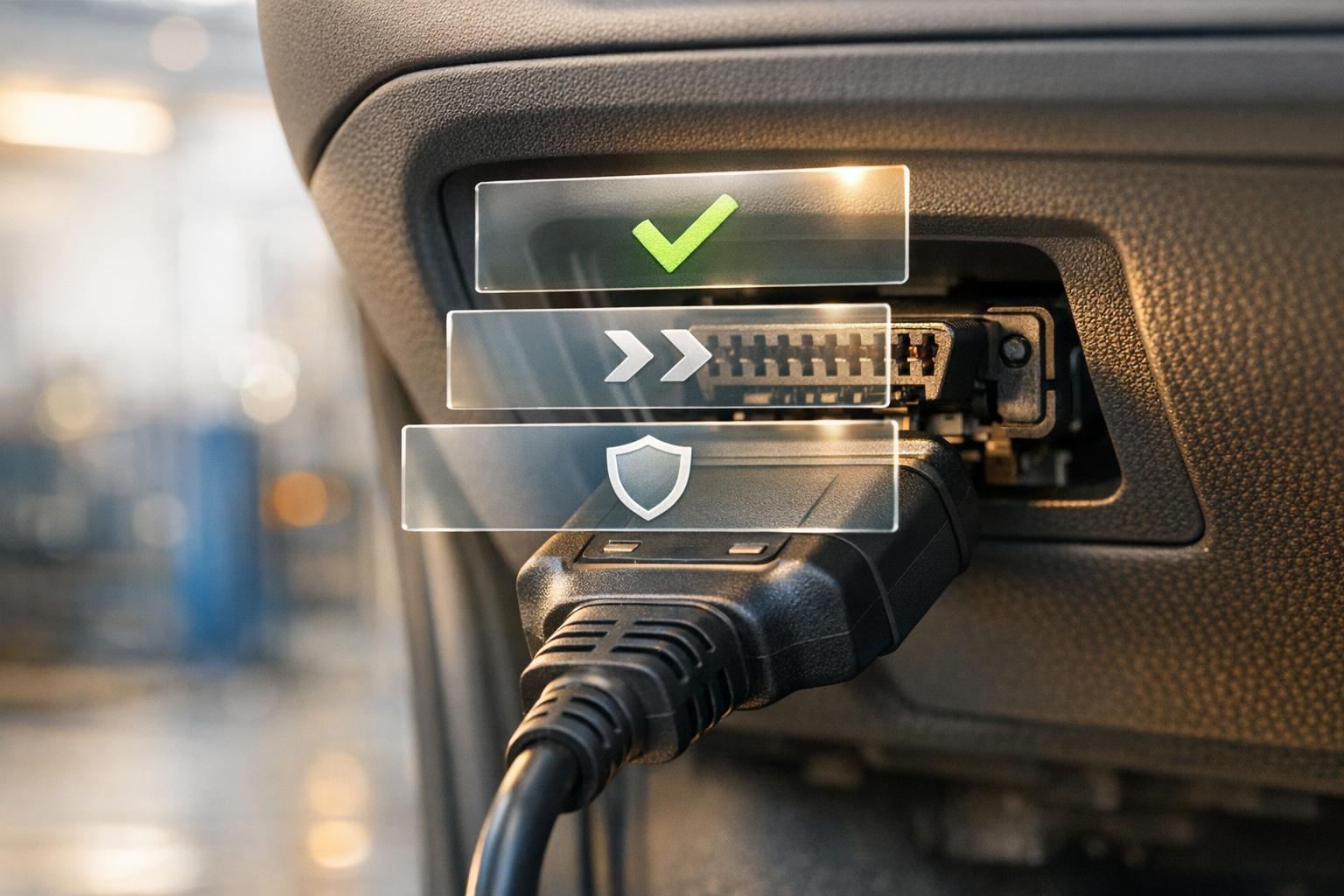
When managing vehicle diagnostics, clear session protocols are critical to ensuring accurate data and compliance with global standards. This article breaks down key international standards shaping On-Board Diagnostics (OBD) session management, highlighting their roles and applications:
- ISO 14229-2: Defines session services for Universal Diagnostic Services (UDS), ensuring compatibility across transport protocols like CAN and Ethernet.
- ISO 15765-4: Focuses on CAN-based OBD-II diagnostics, ensuring reliable emissions testing.
- ISO 27145: Harmonizes global OBD standards under the WWH-OBD framework, supporting modern and legacy transport technologies.
- SAE J1979-2: Integrates traditional OBD-II with UDS for advanced diagnostics, addressing the complexity of modern vehicle electronics.
- AUTOSAR Framework: Centralizes diagnostic session handling with a focus on security and compatibility for diverse vehicle architectures.
Platforms like CarsXE simplify compliance by implementing these standards through APIs, offering developers tools to retrieve diagnostic data efficiently. While each standard has its strengths, their combined use addresses the increasing complexity of vehicle diagnostics and global regulatory requirements.
Unified Diagnostic Services (UDS) Explained - A Simple Intro [2022]
1. ISO 14229-2: Session Layer Services for UDS
ISO 14229-2:2021 operates at OSI Layer 5, acting as the bridge between the UDS application layer (ISO 14229-1) and various physical transport protocols. It standardizes how diagnostic tools communicate with ECUs, whether the vehicle relies on CAN, Ethernet (DoIP), FlexRay, or even older K-Line systems. The standout feature here is protocol independence - diagnostic software doesn’t need to change when automakers shift from one network technology to another. This consistency is the foundation for the standardized command verification process explained below.
The standard introduces six service primitives designed to ensure the complete and accurate transmission of diagnostic commands and responses. These primitives are essential for maintaining data integrity, especially during time-sensitive operations like ECU resets.
When errors occur, the system uses standard negative response codes. For instance, if an ECU cannot complete a requested operation within the allotted time, it sends a negative response back to the client, detailing the issue. This mechanism prevents diagnostic tools from hanging indefinitely or mistaking a lack of response for a successful operation.
Session management builds on these verification processes by defining access levels for diagnostic tools. The default session provides basic functionality, while non-default sessions unlock security-sensitive services. To safeguard against unauthorized access, ECUs automatically return to the default session after a timeout, ensuring an added layer of security.
The standard is versatile, supporting both local and remote communication formats. This flexibility allows it to handle everything from straightforward networks to more intricate vehicle architectures with multiple domain controllers.
2. ISO 15765-4 and SAE J1979: OBD-II Session Operations on CAN
When it comes to managing OBD-II sessions over CAN networks, ISO 15765-4 and SAE J1979 work hand in hand. Although these standards operate at different layers of the communication stack, they complement each other to ensure reliable emissions-related diagnostics for all vehicles sold in the United States since 2008.
ISO 15765-4:2021 focuses on the physical connection, data link, network addressing, and transport of diagnostic messages. It defines how diagnostic tools interface with the vehicle's diagnostic link connector (DLC) and how data packets navigate through the CAN network. Meanwhile, SAE J1979 operates at the application layer, outlining the diagnostic modes and services required for emissions compliance. The newer SAE J1979-2 (OBDonUDS), introduced in April 2021, takes this a step further by aligning its session layer services with ISO 14229-2, integrating traditional OBD-II with Universal Diagnostic Services. This alignment ensures reliable error handling and data integrity across all CAN-based diagnostic systems.
To handle larger diagnostic responses, ISO 15765-2 plays a critical role by enabling segmented data transfers and automating error retransmissions. This prevents data loss or corruption during transmission, ensuring complete and accurate diagnostic information.
SAE J1699-3 focuses on emissions compliance. Its April 2021 update addressed recent CARB regulation changes, mandating the use of SAE J2534-1 or J2534-2 interfaces with API Version 04.04 for compliance testing. This ensures that third-party scan tools - defined under SAE J1978 - can access emissions data from any vehicle, regardless of the manufacturer.
The industry is now shifting from traditional SAE J1979 to SAE J1979-2 (OBD on UDS), reflecting a broader move toward more integrated session management across various diagnostic protocols. This change is particularly important for handling the increasing complexity of CAN addressing. For instance, in vehicles with a growing number of 29-bit ISO 15765 OBD ECUs, traditional J2534-1 interfaces may fall short. Advanced features like "Mixed Format Frames" from J2534-2 are becoming essential to meet these new demands.
3. ISO 27145: WWH-OBD Session Management and Global Harmonization
ISO 27145 was developed to streamline OBD (On-Board Diagnostics) session management on a global scale, replacing the patchwork of region-specific protocols like EOBD and OBD-II. Created under the United Nations' Global Technical Regulation (GTR) No. 5, this standard introduces the World-Wide Harmonized OBD (WWH-OBD) framework, offering a unified system that can be applied across the globe. By building on the principles of ISO 14229-2, it ensures smoother interoperability across various transport technologies.
One of the standout features of ISO 27145 is its transport-agnostic design. While it leverages the UDS (Unified Diagnostic Services) session layer services from ISO 14229-2, it maintains consistent session logic regardless of the communication medium. Whether diagnostics are performed over traditional CAN networks (DoCAN/ISO 15765) or modern Ethernet-based DoIP (ISO 13400), the session management process remains the same. This design allows manufacturers to use the same diagnostic logic across diverse vehicle architectures, eliminating the need to rewrite session handling code.
The WWH-OBD framework also significantly enhances diagnostic capabilities compared to older systems like OBD-II. It supports 2-byte Data Identifiers, enabling monitoring of up to 65,535 parameters, and introduces 3-byte Diagnostic Trouble Codes that include detailed failure mode indicators. In the European Union, WWH-OBD became mandatory for newly developed heavy-duty vehicles starting April 1, 2013, under the Euro-VI standards. These vehicles must meet stringent requirements, including a useful life of up to 435,000 miles (700,000 km) or 7 years for vehicles over 16 tons.
Additionally, ISO 27145 outlines plug-and-play requirements across OSI layers to ensure seamless session establishment, maintenance, and termination. However, certain conditions, such as extreme temperatures (below 19°F or above 95°F) or altitudes exceeding 8,200 feet, may temporarily disable OBD monitoring at engine start.
Despite its technical strengths, the implementation of ISO 27145 depends heavily on regional regulations. While the protocol itself is standardized globally, the rollout and specific OBD limits vary by market, leading to a staggered adoption timeline worldwide.
sbb-itb-9525efd
4. AUTOSAR Diagnostic Session Handling Requirements
AUTOSAR provides a well-organized framework for managing diagnostic sessions. At its core, the Diagnostic Communication Manager (DCM) is responsible for handling state transitions, managing security levels, and overseeing protocol operations. By centralizing these functions, AUTOSAR ensures consistent diagnostic processes across various Electronic Control Units (ECUs) within a vehicle.
This framework closely follows the ISO 14229 (UDS) standards, particularly for session control through Service 0x10. Service 0x10 enables transitions between key session types, such as Default (0x01), Extended, and Programming Sessions. The DCM not only manages these transitions but also enforces strict timing and security measures to prevent unauthorized access. This approach aligns with ISO 14229's guidelines, ensuring a standardized and reliable session control process.
However, the traditional AUTOSAR framework faces significant limitations in the context of modern vehicle architectures. According to ASAM, UDS's static design struggles to meet the demands of High-Performance Computers (HPCs) and vehicles running multiple operating systems. These advanced systems require more flexibility than the traditional ECU-focused model can provide, particularly when addressing software-related challenges rather than just hardware diagnostics.
To bridge this gap, Service-Oriented Vehicle Diagnostics (SOVD) combines traditional UDS sessions with RESTful diagnostics. This hybrid approach allows UDS-based session management to coexist with HTTP/REST and JSON protocols, enabling dynamic software updates and real-time analytics. These capabilities are essential for handling bulk data transfers and supporting modern diagnostic requirements - areas where static session management falls short.
To meet these evolving needs, AUTOSAR systems should be designed to handle both legacy ECU diagnostics and the demands of modern HPCs. This involves implementing dual session management: maintaining traditional session control for established ECUs while integrating service-oriented APIs for software-intensive tasks. This approach ensures vehicles are equipped to manage both current diagnostic processes and the challenges of future technologies.
5. CarsXE OBD Code Diagnostics API
The CarsXE OBD Code Diagnostics API is a RESTful solution designed to handle OBD sessions in line with ISO 14229-2 standards. This ensures seamless and reliable communication between client applications and vehicle ECUs, adhering to the global standards previously discussed. The API also extends its support to CAN-specific protocols, offering flexibility for developers working with modern vehicles.
Built to simplify complex processes, the API supports ISO 15765-4, allowing developers to manage session initialization, maintenance, and termination through straightforward API calls. By abstracting the intricate details of the protocol, it enables easy retrieval of diagnostic data without requiring deep technical expertise in protocol handling.
To ensure compatibility across regions, CarsXE incorporates the WWH-OBD framework (ISO 27145), which standardizes diagnostics globally. The API automatically adjusts timeouts and parameters based on the vehicle's origin, effectively bridging regional differences. With support for data from over 50 countries, it eliminates the challenges of regional fragmentation.
Error handling is robust and follows ISO 14229-2 protocols. Standardized negative response codes are returned for issues such as timeouts, security access denials, or protocol violations. The platform also includes secure authentication measures to prevent unauthorized access, enhancing cybersecurity. Alongside these security features, developers gain access to detailed operational insights for better management.
For added convenience, a developer dashboard provides real-time monitoring of API calls, response times, and session statuses. Pricing begins at a subscription with monthly quota + per-product overage tiers, with additional per-call fees. A free Sandbox tier (up to 100 free API calls) is also available, making it a flexible option for a range of diagnostic needs.
Advantages and Disadvantages
Comparison of International OBD Session Management Standards
This section dives into the pros and cons of various international standards for OBD session management, highlighting their unique features and the challenges they present. Below, we break down the key attributes of each standard and provide a comparative table for clarity.
ISO 14229-2 serves as the backbone for UDS session layer services, offering a unified interface for diagnostic tasks across multiple transport protocols like CAN and DoIP. Its abstract design ensures flexibility, but it requires a compatible transport layer for implementation. The acquisition cost for this standard is approximately $235 USD (CHF 204).
ISO 15765-4 is tailored for emissions diagnostics over the CAN bus. It includes strong error detection and correction mechanisms, ensuring data integrity even in noisy environments. With data transfer speeds reaching up to 1 Mbps, it excels in reliability. However, its reliance on the CAN architecture limits its utility for applications requiring higher bandwidths, such as those better suited to DoIP.
SAE J1979-2 (OBDonUDS) enhances emissions diagnostics by incorporating UDS functionality. According to SAE International, "OBDonUDS is not just a translation of the classic SAE J1979 $01-$0A services to UDS services - it" introduces features like DTC-based readiness, extended data records, and snapshot support. While these updates provide greater functionality, they also add complexity compared to traditional OBD-II protocols.
AUTOSAR focuses heavily on security in diagnostic session handling. As per NIST guidelines, session secrets must be "at least 64 bits in length" and generated using approved random bit generators. Sessions are designed to terminate after a period of inactivity or upon explicit logout to prevent unauthorized access. While these stringent security measures enhance system integrity, they can be challenging to implement, especially when maintaining compatibility with older systems.
Table: Comparison of Key Attributes for Each Standard
Standard Session Control Timeout Configuration Error Handling International Applicability ISO 14229-2 Standardized session layer services Defined timing parameters UDS negative response codes Protocol-independent framework ISO 15765-4 CAN-specific operations Fixed CAN timing Robust error detection and correction mechanisms Mandated for post-2008 vehicles SAE J1979-2 UDS-based services Flexible UDS timeouts Enhanced negative response codes Modern standard for emissions diagnostics AUTOSAR Security-focused sessions Inactivity and overall timeouts Robust termination on inactivity and authentication failures Designed for secure diagnostic systems
This analysis sheds light on the strengths and weaknesses of each standard, helping guide best practices in OBD session management while ensuring compliance with global requirements and addressing practical implementation challenges.
Conclusion
The world of OBD session management is steadily moving toward global alignment, though regional differences in standards persist. At its core, ISO 14229-2 serves as the primary session layer for UDS communication, while ISO 15765-4 continues to underpin CAN-based diagnostics. Meanwhile, the emergence of ISO 27145 signals a major shift, positioning it as the go-to standard for vehicle on-board diagnostics. This standard supports both DoCAN and DoIP, enabling smoother cross-border communication.
The adoption of SAE J1979-2 (OBDonUDS) is reshaping diagnostic services. According to SAE International, market regulations still "specify which data links are allowed for sale in a given market", presenting challenges for developers tasked with navigating diverse regional protocols. This fragmented landscape highlights the importance of unified international standards, which ensure vehicles and diagnostic tools can work together seamlessly, no matter the manufacturer or location.
As these global standards evolve, practical tools must evolve alongside them. Platforms like CarsXE are stepping up to simplify this complex environment. Through its OBD Code Diagnostics API, CarsXE offers real-time data access spanning over 50 countries and supports a wide range of diagnostic standards. With features like RESTful API integration and an intuitive developer dashboard, CarsXE makes it easier to implement compliant diagnostic solutions - whether you're working with older ISO 15765-4 systems or the latest OBDonUDS protocols.
FAQs
What is the relationship between ISO 14229-2 and ISO 15765-4 in managing OBD sessions?
ISO 14229-2 focuses on defining the session layer services necessary for communication between diagnostic session management systems and the transport protocols beneath them. On the other hand, ISO 15765-4 specifies the transport and network layer protocols tailored for CAN-based vehicle networks. These two standards complement each other, with ISO 14229-2 depending on the transport capabilities outlined in ISO 15765-4 to manage diagnostic sessions efficiently.
Simply put, ISO 14229-2 handles the organization and processing of diagnostic requests and responses, while ISO 15765-4 ensures the dependable transmission of this data across the vehicle's network. Together, they create a robust framework for managing OBD sessions in alignment with global standards.
What are the advantages of combining SAE J1979-2 with UDS for vehicle diagnostics?
Integrating SAE J1979-2 with the UDS (Unified Diagnostic Services) protocol brings a powerful combination to vehicle diagnostics. SAE J1979-2 provides a standardized framework that ensures smooth communication between a vehicle's onboard diagnostic (OBD) systems and external tools. Meanwhile, UDS offers advanced features like fault code analysis, ECU reprogramming, and system testing, making it a versatile diagnostic solution.
This collaboration enhances compatibility across various vehicle models, giving technicians access to richer and more detailed diagnostic data. It also supports global OBD compliance, ensuring diagnostic processes are consistent and reliable worldwide. By working together, SAE J1979-2 and UDS establish a strong platform to tackle modern vehicle technologies, including advanced ECU functionalities and over-the-air updates.
What is ISO 27145, and how does it support global OBD standardization?
ISO 27145 is a global standard aimed at harmonizing On-Board Diagnostics (OBD) communication protocols. By leveraging commonly used technologies like CAN (Controller Area Network) and IP (Internet Protocol), it establishes a unified framework for exchanging vehicle diagnostic data.
This standard streamlines the shift from outdated systems to a universal model, simplifying compliance for manufacturers and regulators across various regions. It also allows room for future updates, enabling the automotive industry to keep pace with changing technologies and international requirements.
Related Blog Posts
- Global Emission Standards: Compliance Guide
- Impact of Regional Standards on VIN APIs
- How OBD Data Powers Predictive Analytics
- How to Integrate OBD Data into Your App