Engine Code Reader

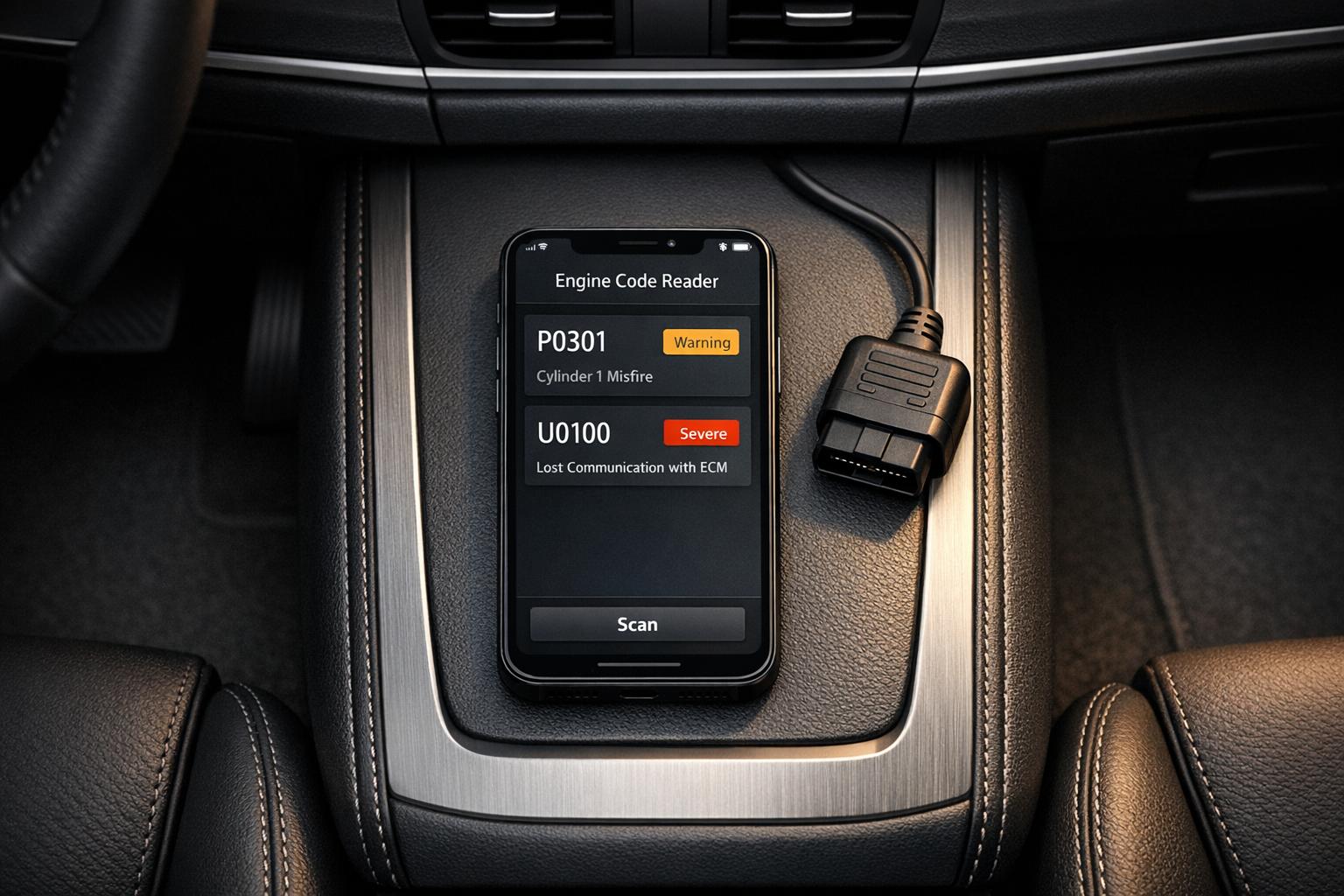
Engine Code Reader
Understand Car Fault Codes Faster
A Simple Way to Decode OBD-II Warnings
An illuminated check engine light can feel vague, especially when all you have is a code like P0301 or U0100. An Engine Code Reader helps translate those diagnostic trouble codes into plain English, so you can quickly understand what system is involved and how serious the issue may be. Instead of sorting through forum posts or conflicting advice, you get a clearer explanation tied to standard OBD-II formatting and code families such as powertrain, body, chassis, and network.
What You’ll Learn From Each Code
A good Engine Code Reader does more than define a number. It shows whether the code is generic or manufacturer-specific, gives a practical description, and highlights common possible causes when a standard match exists. That makes it easier to decide whether the issue should be monitored soon or addressed promptly.
Why This Lookup Matters
For drivers, DIYers, and used-car shoppers, a fast trouble code lookup can save time and reduce guesswork. It won't replace proper testing, and a code description should never be treated as a guaranteed repair, but it gives you a solid starting point for diagnosis. Whether you're checking a misfire code or researching a communication fault, this OBD-II decoder helps turn raw scan data into something useful.
FAQs
Can this tool tell me exactly what part to replace?
Not by itself. An OBD-II code is a starting point for diagnosis, not a confirmed repair recommendation. For example, a code may point to a system problem like a misfire or catalyst efficiency issue, but the real cause could be a sensor, wiring fault, vacuum leak, fuel issue, or something mechanical. Use the result to narrow the problem, then confirm it with proper testing.
What does it mean if a code is manufacturer-specific?
If the second character shows the code is manufacturer-specific, the exact meaning can vary by make and model. The tool can still tell you the code family and explain that the definition may not be universal, but you should verify it against service information for your vehicle. That's especially important for body, chassis, and network codes, where definitions often differ more between brands.
Is it safe to keep driving with a trouble code?
It depends on the code and how the vehicle is behaving. Some issues are lower urgency and can be monitored briefly, while others should be addressed promptly because they can affect drivability, emissions, safety systems, or even lead to more expensive damage. If the car is running poorly, stalling, overheating, flashing the check engine light, or showing brake or airbag warnings, don't rely on a code lookup alone—inspect it right away.